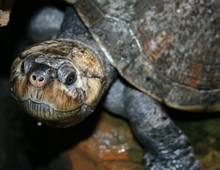
This beautiful tortoise was listed as an endangered species by the US Government in 1973. In the last decade, its status has deteriorated from being classified as vulnerable to extinction,…
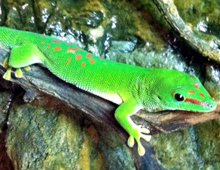
Most of the more than 2,000 species of geckos are nocturnal. Many are colored like bark, or in earth tones. In contrast, as their name implies, the 40 or so…
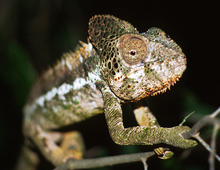
Another very large chameleon of Madagascar, this lizard is slightly smaller than the very similar Oustalet's chameleon, and differs in having fewer spikes in the crest on its back. It…
Reaching 27 inches in length, this is the biggest species of chameleon. Along with insects, it eats small birds and mammals. Like other chameleons it shoots out its tongue with…
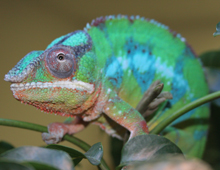
While the familiar Green anole, often seen in local gardens, may be called the "American Chameleon", it is actually related to iguanas and basilisks. True chameleons are an entirely Old…
This critically endangered freshwater turtle was long thought to be in the otherwise South American genus Podocmemis, which includes the Arrau and Yellow-spotted side-necked turtles, also displayed at the DWA.…
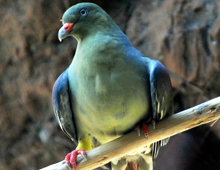
The 23 species of Green pigeons are found in Africa, Asia and the Lesser Sundas. They are usually found in trees, where they eat fruit, especially figs. The green coloration…
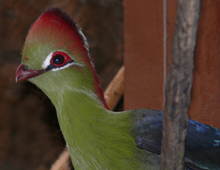
One of a number of rather similar looking mostly green turacos that have black facial markings, this species is distinguished by the broad rose-red margin to its crest. Found only…
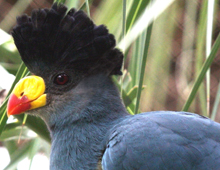
Although it is the most widely distributed of all of the 23 species of turacos, with a broad range in the forests of West and Central Africa, the Great blue…
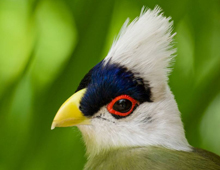
Turacos are an entirely African family. Traditionally considered distant relatives of cuckoos, it has been proposed these fruit and bud-eating birds may be more closely related to owls. Found almost…