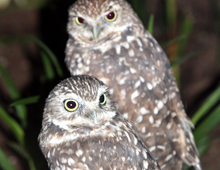
Found all the way from the prairies of Southern Canada to Tierra del Fuego at the tip of South America, this is one of the most widespread birds of the…
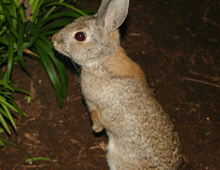
The 17 species of cottontails are entirely New World rabbits, in a different genus from domestic ones. They are distributed from Southern Canada to Northern Argentina. Eight are found in…
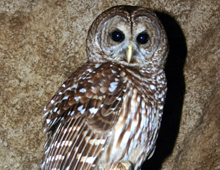
Famed as the "Owl with the Southern Accent", its call (frequently heard around Dallas) has been paraphrased as "Who Cooks for You-all!". Traditionally a bird of the eastern US, with…
In zoos, colonies of this species are like yeast -- a few sent to another zoo soon reproduce to the carrying capacity of their exhibit, and more colonies can be…
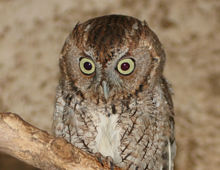
Instead of a screech, this bird actually produces a rather gentle-sounding descending trill. Being small, it is prone to being eaten by other owls. On the other hand, they are…
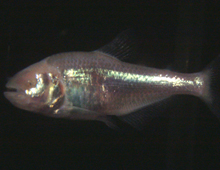
When first discovered in the 1930s, these eyeless, pigmentless fish were assigned their own genus, Anoptichthys. Since then, ichthyologists have determined they are at least 30 genetically isolated populations of…
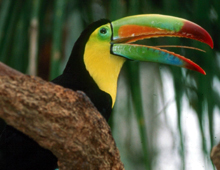
Also known as the Rainbow-billed or Sulfur-breasted toucan, it is popular for its resemblance to "Toucan Sam™", the "Froot Loops®" mascot. The northernmost of the large toucans, it ranges from…
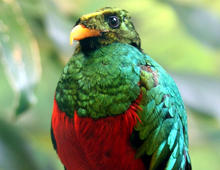
The Mayans and Aztecs demanded rare tribute from their subject peoples. The feathers of quetzals were prized more than gold. The five species of quetzals are specialized trogons, found from…
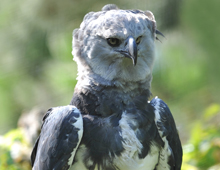
A top-of-the-food chain predator, this enormous bird is not abundant anywhere in its vast range from the Mexican States of Veracruz and Oaxaca south to Argentina, Bolivia, and Southern Brazil.…
This marvelous parrot was one of the first New World animals brought alive to Europe, in the 1500s. Long before, it was prized as a pet, and for its feathers,…